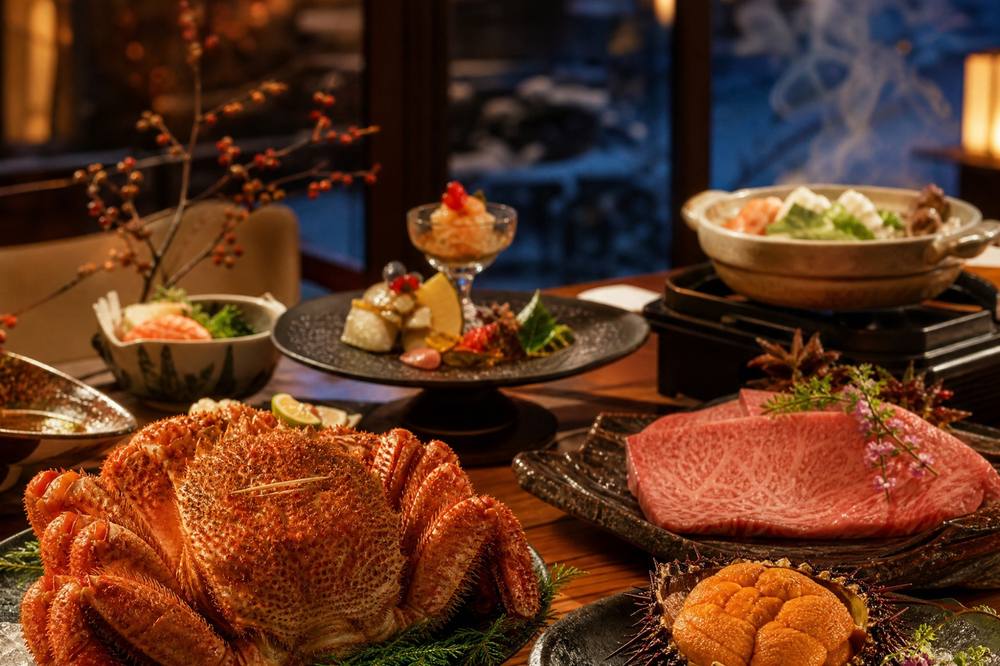
People come to Hokkaido in winter for the snow. Many of them leave talking about the seafood. When the sea is at its coldest, crab, sea urchin and oysters are at their best. Here is what a local would tell you to look for.
Hairy crab (kegani)
Hokkaido’s hairy crab is small, but its sweet meat and rich “crab miso” make it a local favorite. Different areas of Hokkaido take turns fishing it through the year, and in winter the season moves along the Pacific coast: Hidaka in December, then Tokachi, Kushiro and Soya in January.
King crab (tarabagani)
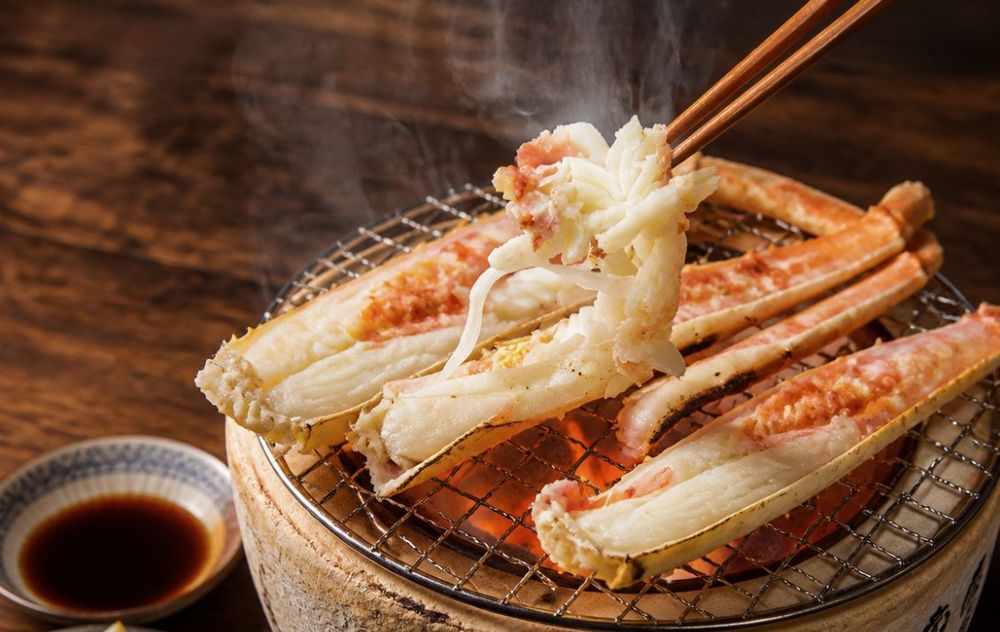
If hairy crab is the local favorite, king crab is the “king of crabs”. Its legs are huge, and the meat comes out in thick, sweet, juicy pieces. Enjoy it simply boiled or grilled over charcoal (yaki-taraba). It is a treat, so it is not cheap, but sharing a king crab is one of the great memories of a winter trip to Hokkaido.
Both kinds of crab can be enjoyed in many more ways:
- Kani-shabu: thin slices of raw crab swished in hot broth for a few seconds, until they bloom like flowers.
- Kani-meshi: rice cooked with crab meat and its broth, full of flavor.
- Tempura: crab legs in a light, crispy batter.
- Kani-zosui: rice and egg simmered in the broth left over from a crab hot pot. Many locals say this is the best part of the meal.
Sea urchin (uni)
Most people think of sea urchin as a summer food, but in eastern Hokkaido the best season is winter. Kushiro starts around November, followed by Habomai in December. In Rausu, on the Shiretoko Peninsula, sea urchin fishing begins in mid-January, in the season of drift ice. The water is ice cold, and the uni is sweet and firm.
Oysters
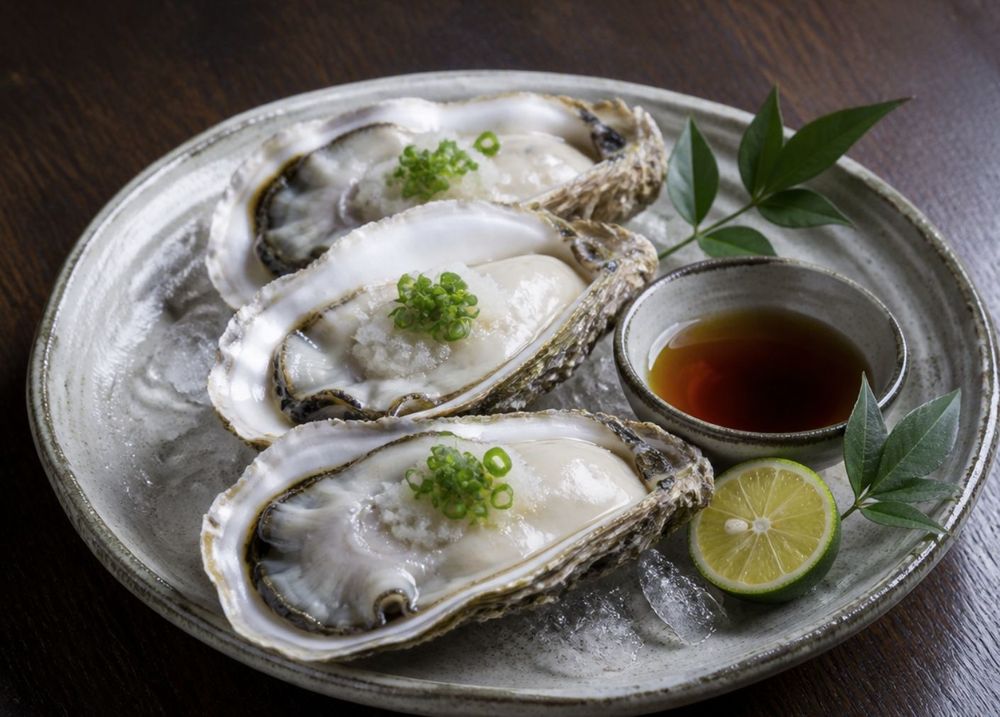
Winter is oyster season. Akkeshi and Senpōshi in eastern Hokkaido, and Lake Saroma on the Sea of Okhotsk side, are known as Hokkaido’s three great oyster areas. There are many ways to enjoy them:
- Raw with ponzu, the way locals love them: a splash of ponzu, a citrus soy sauce, brings out the sweetness. A squeeze of lemon works too.
- Raw with a drop of whisky: pour about a teaspoon (5 ml) of malt whisky onto a raw oyster in its shell and eat it in one go. The smoky aroma and the briny oyster are a perfect match. This way of eating oysters comes from Scotland, and it fits Hokkaido perfectly. Try it with a Hokkaido whisky from Yoichi or Akkeshi.
- Grilled in the shell (kaki-yaki), cooked until the shell pops open and the juices bubble.
- Steamed with sake (sakamushi), which keeps them plump and juicy.
- “Gangan-yaki”, a Hokkaido favorite: oysters and other shellfish steamed together in a can over the fire.
- In a hot pot (kaki-nabe), often with a miso broth that warms you to the core.
- Deep-fried (kaki-fry), crispy outside and creamy inside. A great choice if you are not sure about raw oysters.
Cod and “tachi”
From November to March, cod is in season all over Hokkaido. It goes into hot pots that warm you up after a cold day. If you are feeling adventurous, try “tachi”, the cod’s milt. Locals love it, and you will find it at izakaya pubs as “tachi-pon”, served with ponzu sauce. It is creamy and mild. Even better is tachi tempura: crispy on the outside and meltingly creamy inside. Ask for “madachi”, the milt of Pacific cod, which locals prize most.
Anglerfish (ankō)
With its huge mouth and slimy skin, the anglerfish may be the ugliest fish you will ever see. But one taste, and you will forget all about its looks. It is at its best in the coldest months, when the liver grows big and rich.
Almost nothing goes to waste. In Japan, the edible parts are called the “seven treasures”: the white meat, the liver, the skin, the gills, the stomach, the ovaries and the fins. Each has its own texture, from soft and fluffy to chewy and gelatinous.
If you get the chance, go and watch an anglerfish cutting show. It is much rarer than the famous tuna-cutting shows, and the method is unlike anything else: the fish is so soft and slippery that it cannot be cut on a board, so it is hung from a hook and taken apart piece by piece while it hangs. It is fascinating to watch, and a story to take home.
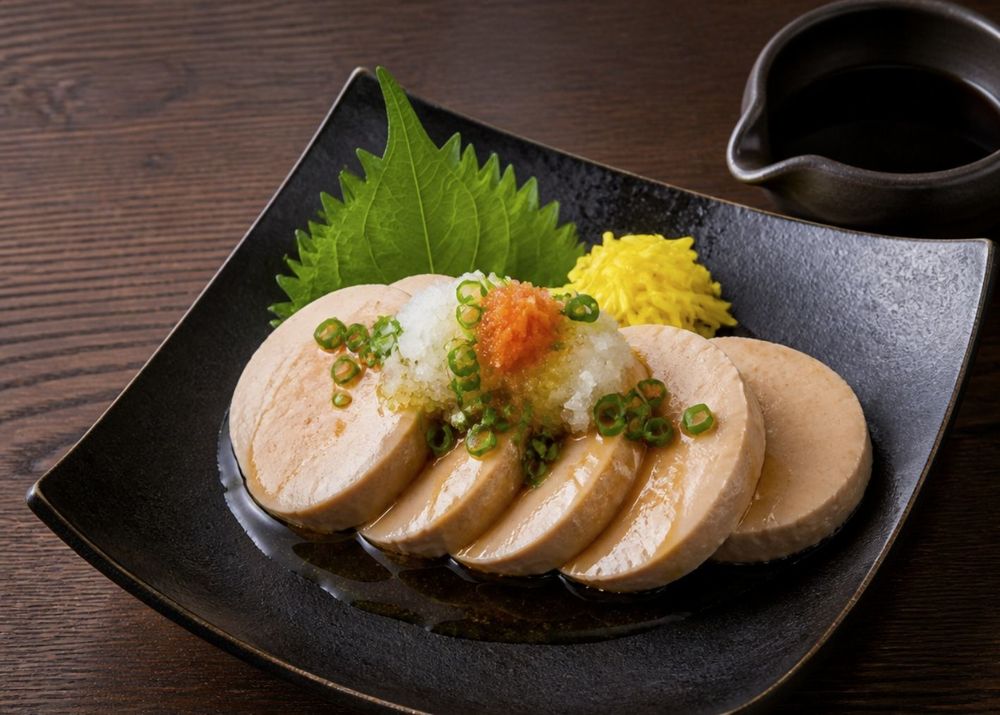
The classic way to eat it is ankō-nabe, a hot pot where the seven treasures simmer with vegetables. The liver melts into the broth and turns it rich and creamy. And do not miss “ankimo”, the steamed liver, often called the foie gras of the sea: smooth, rich and perfect with a little ponzu.
Kinki (thornyhead)
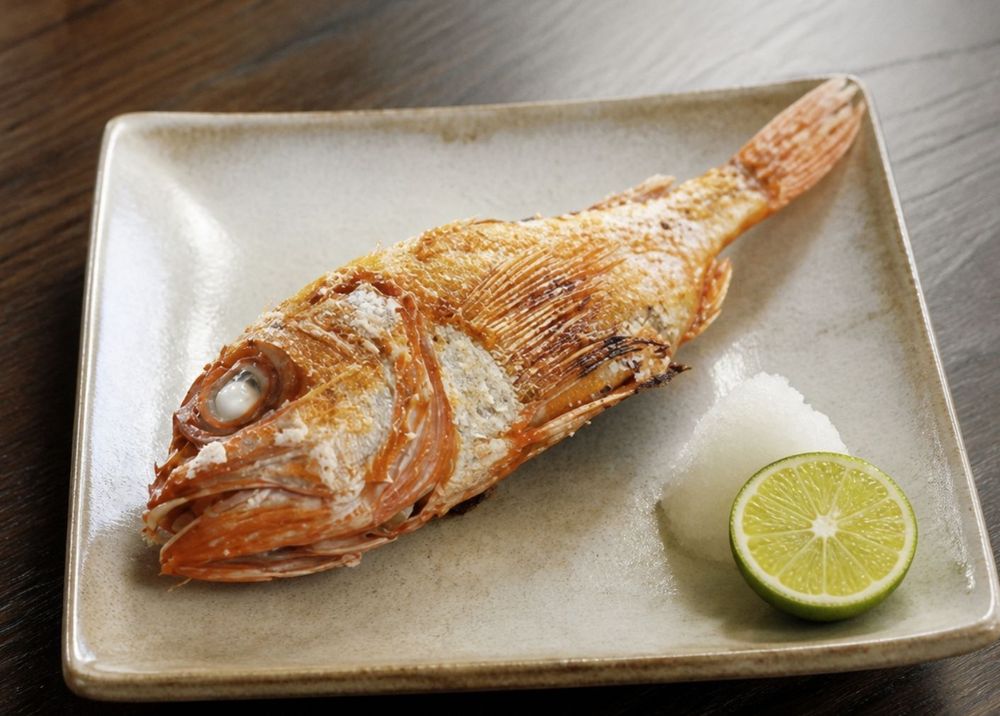
Kinki is a true luxury fish. In Japan it is served at high-end restaurants and given as a special gift. This bright red fish is especially famous around Abashiri and Rausu on the Sea of Okhotsk. Its white flesh is rich with fat that melts in your mouth. It is delicious both salt-grilled (shioyaki) and simmered in a sweet soy sauce (nitsuke), but if the fish is really fresh, locals will tell you: grill it. Simple salt-grilling brings out its true flavor best. And if you are lucky enough to be near where it is landed, look for kinki sashimi. It loses its freshness very quickly, so you can only eat it raw right where it is caught. It is a taste you will not find anywhere else. It is expensive, but one bite tells you why it is treated as a treasure.
Where to eat it
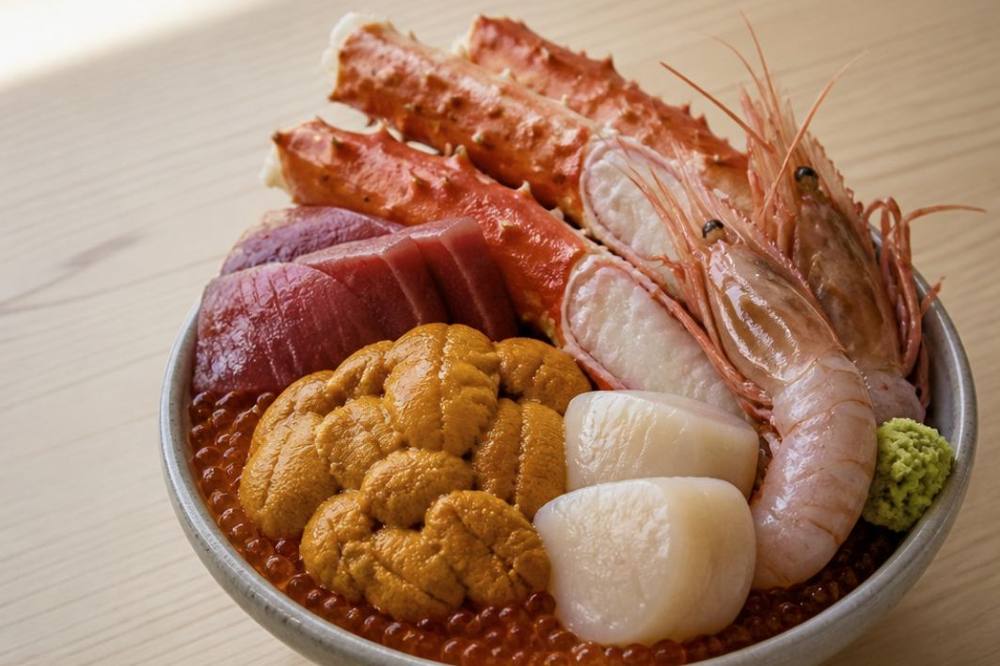
- Sapporo — Nijo Market: right in the city center, a short walk from Odori. Good for a seafood bowl at breakfast or lunch.
- Hakodate — Morning Market: next to Hakodate Station, with dozens of seafood bowl shops.
- Kushiro — Washo Market: famous for “katte-don”, where you start with a bowl of rice and buy toppings piece by piece from the stalls.
A few tips: markets open early and many shops close by early afternoon, so go in the morning. Some crab is sold at “market price”, so always ask the price before you order.
Let TAO find the food for you
Choose “Gourmet” when you plan with TAO, and it builds your trip around Hokkaido’s food: a seafood bowl at the market in the morning, local restaurants for dinner, and the season’s best along the way. Made by a local who knows Hokkaido inside out.
👉 Plan your Hokkaido trip at tao.n43works.com